

BPC-157 5mg
BPC-157 5mg
Couldn't load pickup availability

Fast Shipping
Orders are shipped out within 1 working day.

Secure Payment
We guarantee that the payments are 100% secure.

Research Use Only
Our Peptides are intended for research use only.
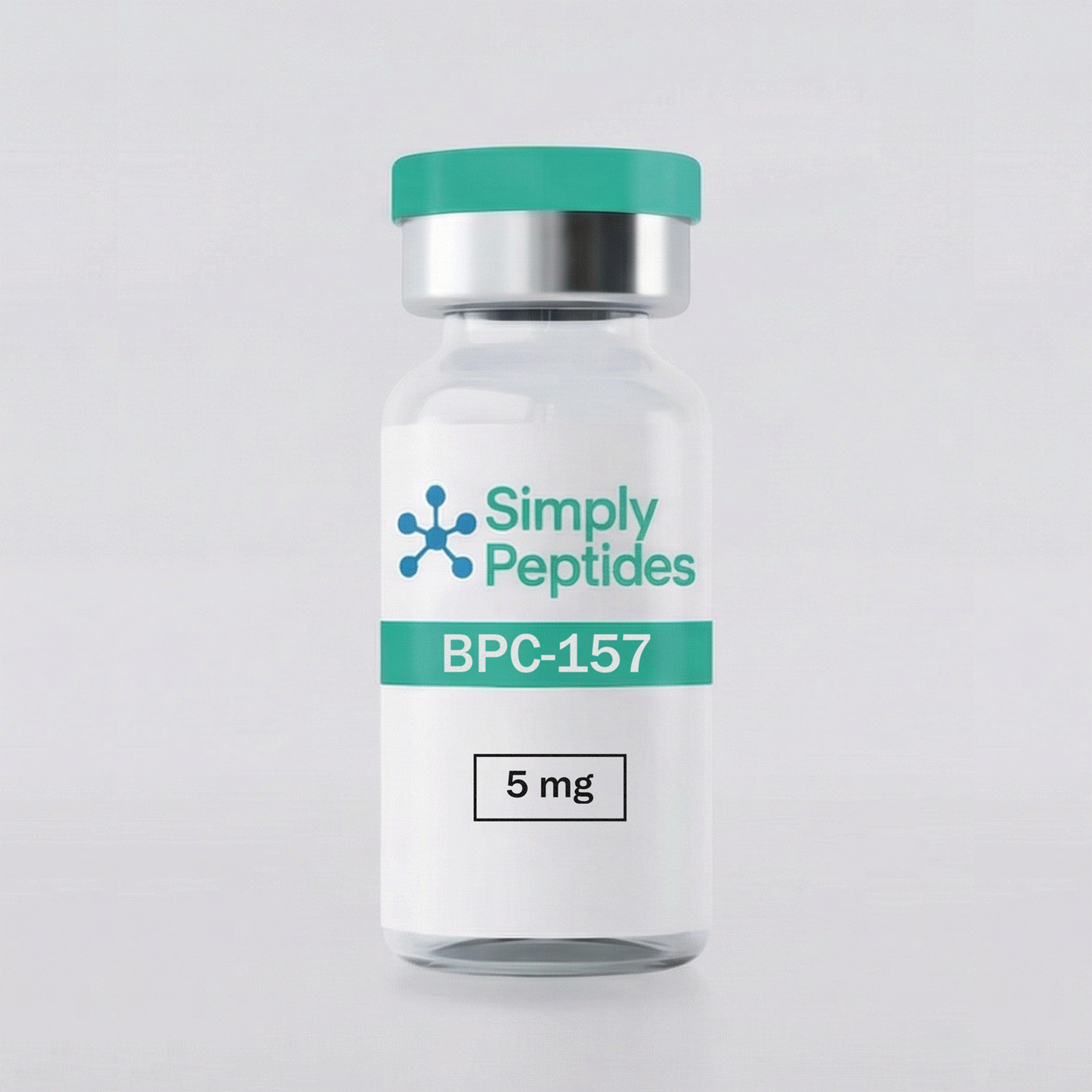
BPC‑157 5mg
BPC‑157 (Body Protection Compound‑157) is a synthetic pentadecapeptide consisting of 15 amino acids. It is derived from a protective protein found in gastric juice and is widely studied for its potential roles in tissue repair, angiogenesis, and cellular regeneration. As a research compound, BPC‑157 is valued for its stability, broad biological activity, and relevance to gastrointestinal, musculoskeletal, and neurovascular research. This material is ideal for controlled laboratory studies requiring precision, purity, and reproducibility.
- Product Name: BPC‑157 5mg
- Catalogue Number: BPC157-005
- Molecular Formula: C62H98N16O22
- CAS Number: 137525‑51‑0
- Molecular Weight: 1419.5 g/mol
- Purity: ≥99%
- Compound Type: Pentadecapeptide / Research Peptide
- Form: Lyophilised Peptide Powder – What is this? Read more here.
Why Is BPC‑157 of Interest to the Research Community?
BPC‑157 is a stable gastric‑derived peptide that has gained significant research interest due to its involvement in tissue repair and protective biological pathways. It has been studied across multiple systems, making it a versatile compound for preclinical research.
Key areas of scientific interest include:
- Tendon and ligament repair — BPC‑157 is widely used in studies involving connective tissue recovery.
- Angiogenesis — research suggests it may support new blood vessel formation.
- Gastrointestinal protection — relevant to studies on mucosal integrity and inflammatory responses.
- Neurovascular research — explored for its potential influence on neuronal survival and microcirculation.
- Anti‑inflammatory pathways — BPC‑157 is frequently used in models involving oxidative stress and inflammatory signalling.
Because of its broad biological activity and stability, BPC‑157 is widely studied in regenerative medicine, gastrointestinal biology, and musculoskeletal research.
Usage and Storage:
BPC‑157 is supplied as a lyophilised peptide powder to ensure maximum stability and ease of handling in research environments. For best results, follow our website’s detailed reconstitution and storage guidelines.
Learn more about peptide storage
Synthesis and Quality Assurance:
Our BPC‑157 is synthesised using controlled peptide manufacturing processes designed to ensure high purity, structural accuracy, and batch‑to‑batch consistency. Each batch undergoes stringent purification and analytical testing to meet the rigorous standards required for advanced scientific research.
Why Choose Simply Peptides for BPC‑157 in the UK?
Simply Peptides is committed to providing research‑grade compounds of uncompromising quality. Through direct manufacturing partnerships, we maintain full oversight of production standards and batch consistency. Researchers across the UK and internationally trust our transparent testing, rigorous quality control, and dependable supply chain.
Is This Product for Human Use?
No. This material is for research only and is not intended for human consumption or clinical applications.
External Resources for Researchers
Alternative Names for BPC‑157
- Body Protection Compound‑157
- Bepecin
- PL 14736 – Development code name
- Gastric Pentadecapeptide
Legal and Safety Information:
Simply Peptides supplies BPC‑157 strictly for scientific and research use. Our products are not intended for human consumption or clinical application. We uphold stringent quality and legal compliance standards to support the research community.
COA & Testing Reports
Certificate of Analysis (COA) & Independent Testing
Each batch of BPC‑157 is accompanied by a Certificate of Analysis (COA), verifying identity, purity, and composition using validated analytical methods. This ensures transparency and supports research integrity.
In addition to internal quality control, we commission independent third‑party analysis to confirm peptide purity, molecular weight, and absence of contaminants. These reports are available upon request to qualified research professionals.
- Batch‑specific COA are available for download or review here
- Third‑party lab testing for purity and identity confirmation are available here
- Analytical methods include HPLC, Mass Spectrometry, and Microbial Screening here
Note: All documentation is provided for research reference only and is not intended to support clinical or therapeutic claims.